
Coatings & Corrosion
Flux marine 🔗
Skills Advanced: CAD (SolidWorks), Electrochemical Testing, Circuit Design, Node-Red, Raspberry Pi, Python, Coatings, Corrosion Protection
Objective: Identify potential root causes of, and reduce severe corrosion on the Flux Marine outboard through a series of tests and recommend an alternative coating option.
Flux began this test program after corrosion appeared on customer and test motors following the first current-gen motor deliveries, concentrated on the anti-ventilation plates (AVPs) and belt housings. Flux hypothesized that the corrosion stemmed from three sources: suboptimal electrical bonding across the system, stray current during operation and charging, and poor coating selection.
The six tests below evaluate that hypothesis, identify coatings with improved corrosion resistance relative to current production options, and generate recommendations for charging and bonding procedures. I refined the test procedures, purchased materials, built all of the test setups, ran the tests, and reported on the findings.
Test 2 – Anode protection
Determine the effectiveness of the outboard anodes and whether they are over- or under-protecting the system.
Materials:
EB2+ Outboard
Large tank
Bristol Harbor water
BoatZinc’s silver/silver-chloride (Ag/AgCl) reference electrode
DMM
Pass Criteria:
-950 to -1100 mV DMM reading average
Values more negative than −1100 mV indicate potential over-protection and hydrogen evolution risk
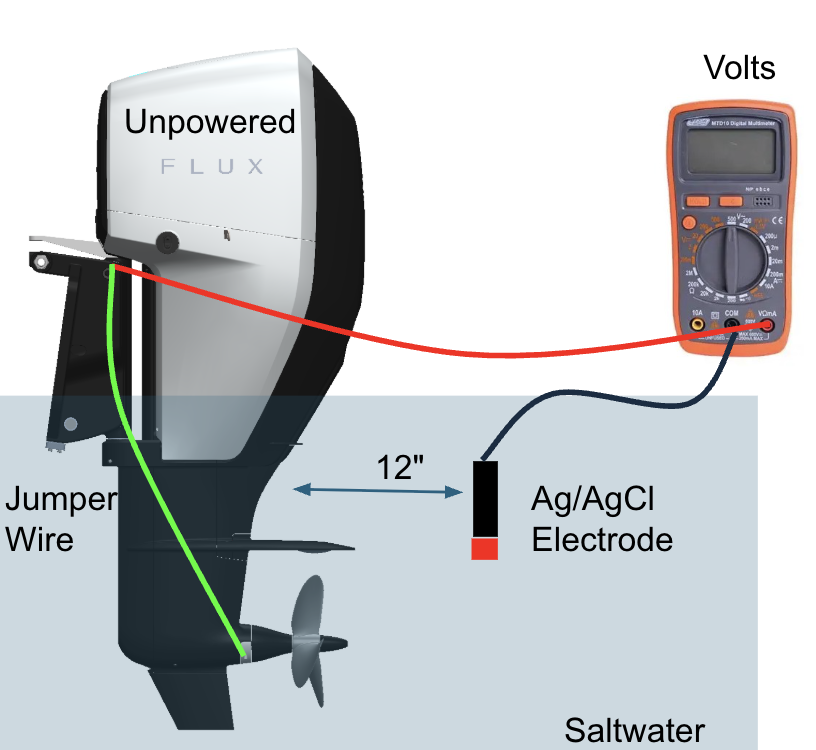
Test 4A – DC Stray Current: Potential
Determine the existence of stray current from the outboard during charging and various operating states
Materials:
EB2+ Outboard with anodes removed
Large tank
Bristol Harbor
BoatZinc’s silver/silver-chloride (Ag/AgCl) reference electrode
DMM
Pass Criteria:
< ±10 mV > Excellent, within measurement noise
±10–50 mV > Normal, minor environmental variation
±50–100 mV > Marginal, investigate further, may indicate leakage
> +100 mV (anodic) > FAIL, clear stray anodic current, active corrosion risk
> -100 mV (cathodic) > Caution, over-protection, hydrogen embrittlement risk on susceptible alloys
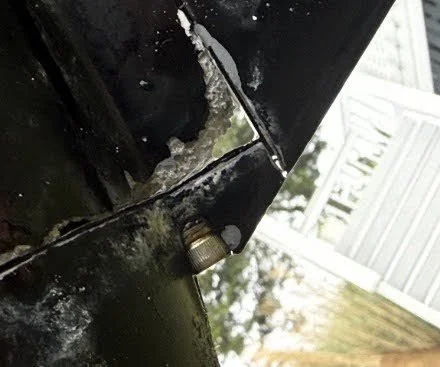
A belt housing with severe corrosive material loss
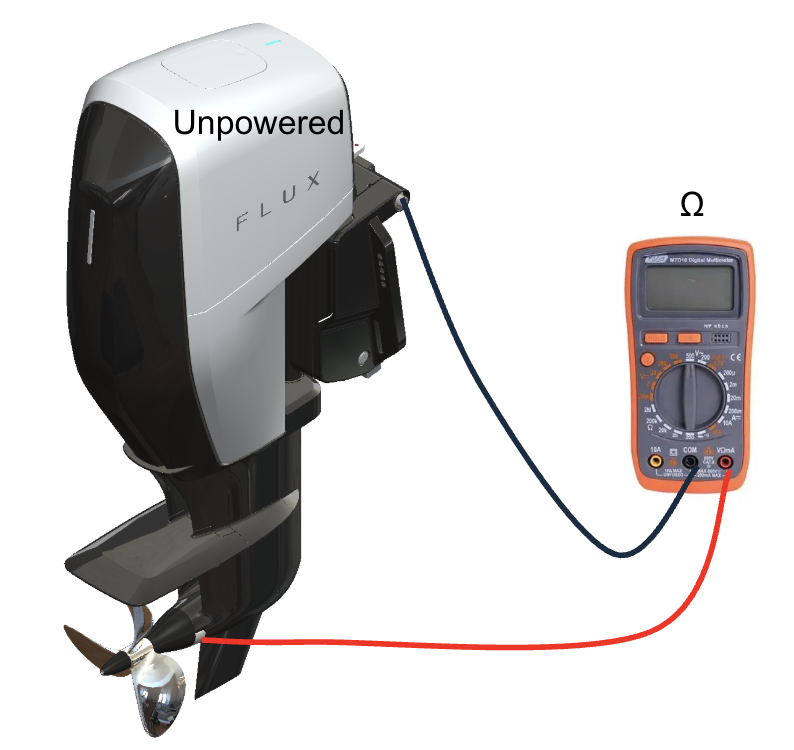
Test 1 – Outboard Bonding
Determine the effectiveness of bonding wires across the system and the electrical resistance throughout the outboard.
Materials:
Flux Outboard
Digital Multimeter (DMM)
Pass Criteria:
No Greater than 1 OHM of resistance across all of system
Less than 0.5 OHM preferred
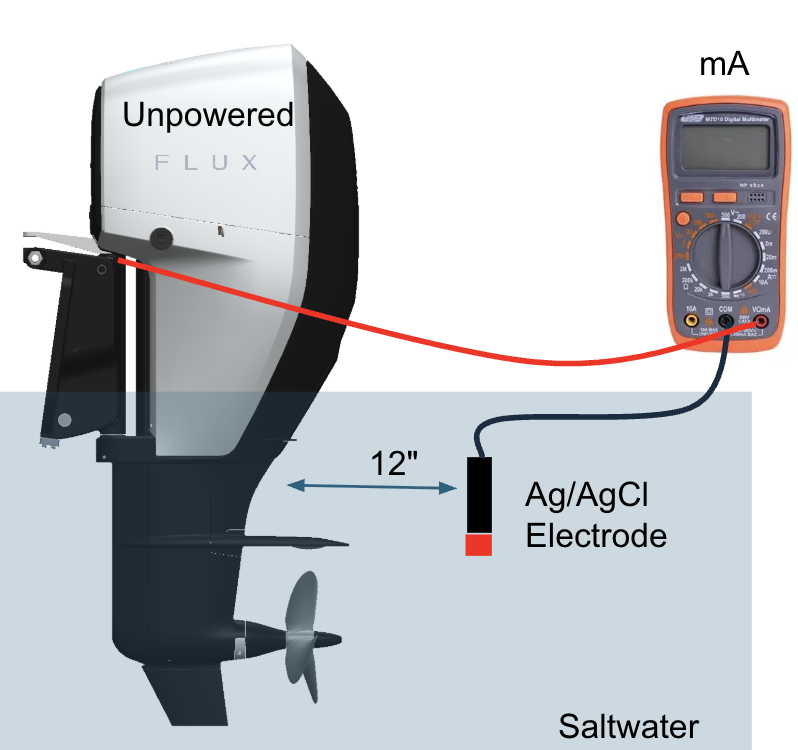
Test 3 – Anode Bonding
Determine the effectiveness of the anode bonding of the outboard without uncoated contact pads below the anodes.
Materials:
EB2+ Outboard
Large tank
Bristol Harbor
BoatZinc’s silver/silver-chloride (Ag/AgCl) reference electrode
DMM
Alligator jumper wires
Pass Criteria:
Greater than 20mV difference from bonding wire vs no bonding wire implies suboptimal bonding of anode
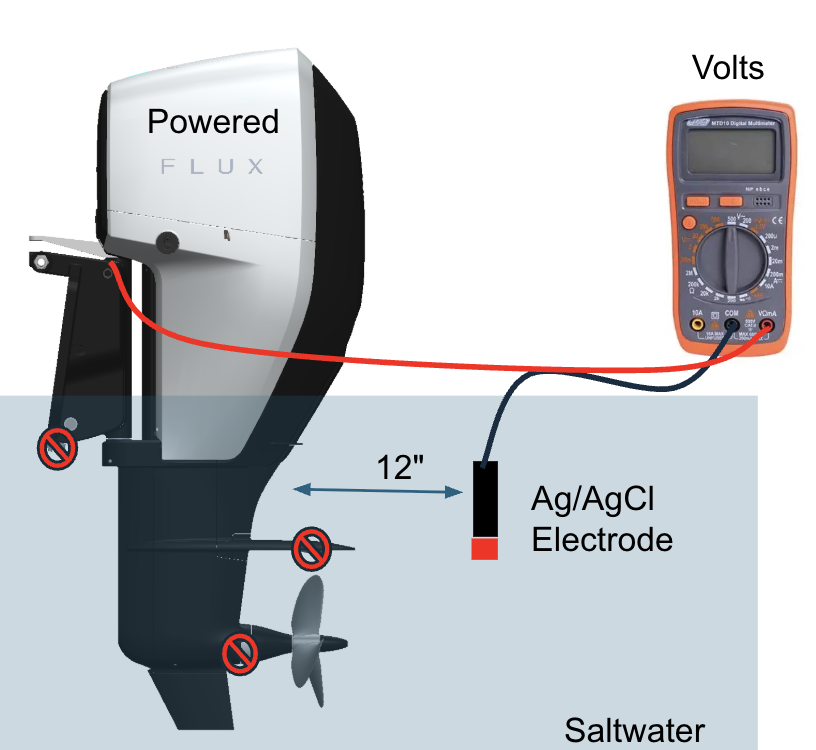
Anodes removed for stray current testing